Wheel 101 · Part 4
A real wheel strategy example, and my rules
The first three lessons used made-up numbers. This one doesn't. Here's a full trip around the wheel from my own account, a trade that's going against me right now, and the five rules I follow because of trades like that one.
A real trip around the wheel (from my account)
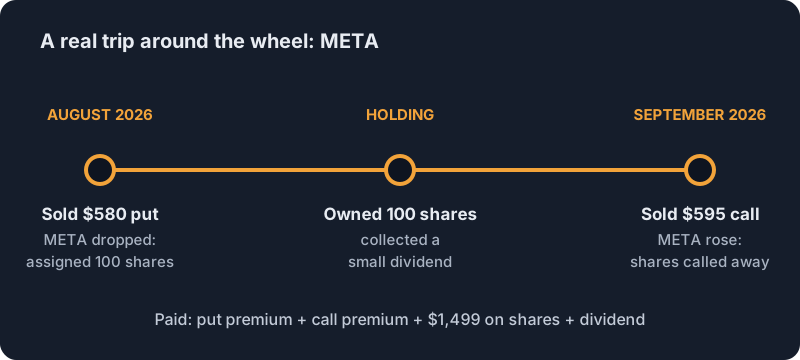
- August 2026: Sold a META put at $580. META dropped, so I got assigned and bought 100 shares.
- September 2026: Sold a META covered call at $595. META went up, and my shares got sold.
I got paid premium on both steps, plus $1,499 on the shares, plus a small dividend while I held them.
What that META trade shows
- Assignment wasn't a problem. META dropped, I got assigned, and that's exactly what the plan allowed for. I wanted to own META at $580.
- The call was above my cost. I sold the call at $595, higher than the $580 I paid. When the shares got called away, that gap became profit.
- Three ways to get paid. Put premium, call premium, and the gain on the shares. The dividend was a small bonus on top.
- It took about two months. Most wheel trips are a matter of weeks or months, not days.
Not every trip goes this smoothly, which brings us to the next one.
And a real one that's not done yet
I got assigned MCD at $285. When I wrote this in October 2026, it was trading around $248. I'm down on the shares and selling calls while I wait. That's the wheel's real risk, and why the rules below matter.
On paper, that's about $37 a share, or roughly $3,700 on 100 shares, before the premiums I've collected. The wheel didn't prevent that drop. Premium only softens it.
Here's how I'm handling it:
- I still want to own McDonald's. That's the whole reason I sold the put. My view of the business didn't change because the price did.
- Calls stay at or above my cost. That's rule #4. Calls that far above the price pay less, but I won't lock in a loss.
- It's one contract out of many. Because of rule #2, one stock being down doesn't sink the account.
I'll update the Discord as this one plays out, good or bad.
The rules I follow
- Only stocks I'd happily own for years. If you wouldn't buy it anyway, don't sell a put on it. When a trade goes wrong, this is what lets you sleep.
- One contract per stock, spread across many. One bad stock shouldn't sink you. MCD is down, but it's one position out of many.
- Take profit at 50%. If I collect $100, I set an order to close it when it's worth $50. Locks in a win, frees up cash. The last half of the premium usually comes with the most risk for the least reward.
- Never sell a call below what I paid. Otherwise I could lock in a loss. This is why I'm patient with MCD instead of chasing bigger call premium.
- Keep cash for the puts. No borrowing to cover them. If every put got assigned at once, I could still pay for the shares.
Why rules beat feelings
The wheel feels easy when stocks go up. The rules exist for the weeks when they don't. A stock that drops 15% makes you want to do something: sell a cheap call, double down, or bail out. Writing your rules down before that happens is what keeps one bad trade from becoming several.
Your rules don't have to match mine. But have some, and write them down.
How I track every trade
I log every trade, wins and losses, in a wheel log that members can see. It shows the stock, strike, premium, dates, and how each trade ended. That log is how I know my real results instead of guessing, and it's how members can check my work.
These are my own trades in my own account. They aren't typical results and aren't a recommendation.
Questions beginners ask
Does the wheel strategy really work?
It can produce steady income on stocks you'd own anyway, but it doesn't remove stock risk. My META trade worked well. My MCD trade is down right now. Both are normal parts of running the wheel.
What happens if a stock drops a lot after assignment?
You own shares worth less than you paid. Most wheel traders keep selling calls at or above their cost and wait, as long as they still believe in the company. The premium lowers your cost a little each time.
How many stocks should you wheel at once?
Enough that one bad stock can't do serious damage. I use one contract per stock across many different companies.
What's the 50% profit rule?
Once a put or call has lost half its value, you buy it back and keep half the premium. It locks in a win early and frees your cash for the next trade.